
|
Weeks 1– 4 |
0.25 mg |
5 units |
|
Weeks 5– 8 |
0.50 mg |
10 units |
|
Weeks 9–12 |
0.75 mg |
15 units |
|
Weeks 13–16 |
1.00 mg |
20 units |
|
Weeks 17–20 |
1.25 mg |
25 units |
|
Weeks 21–24 |
1.50 mg |
30 units |
|
Weeks 25–28 |
1.75 mg |
35 units |
|
Weeks 29–32 |
2.00 mg |
40 units |
|
Weeks 33–36 |
2.25 mg |
45 units |
|
Weeks 37–40 |
2.50 mg |
50 units |
Weeks 1– 4 | 2.55 mg | 15 units |
Weeks 5– 8 | 3.40 mg | 20 units |
Weeks 9–12 | 4.25 mg | 25 units |
Weeks 13–16 | 5.10 mg | 30 units |
Weeks 17–20 | 5.95 mg | 35 units |
Weeks 21–24 | 6.80 mg | 40 units |
Weeks 25–28 | 7.65 mg | 45 units |
Weeks 29–32 | 8.50 mg | 50 units |
Weeks 33–36 | 9.35 mg | 55 units |
Weeks 37–40 | 10.20 mg | 60 units |
Weeks 41–44 | 11.05 mg | 65 units |
Weeks 45–48 | 11.90 mg | 70 units |
Weeks 49–52 | 12.75 mg | 75 units |
Weeks 53–56 | 13.60 mg | 80 units |
Weeks 57–60 | 14.45 mg | 85 units |
Weeks 61–64 | 15.30 mg | 90 units |
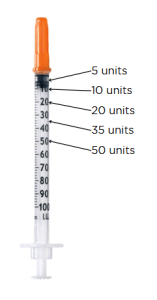 We recommend the use of 100-unit insulin syringes and alcohol swabs. These are available at most pharmacies and do not require a prescription.
GLP-1s, like any medication, comes with potential side effects.
Common side effects include:
- Nausea
- Vomiting
- Diarrhea
- Stomach pain
- Constipation
Less common but more serious potential side effects may include:
- Pancreatitis- Contact a provider immediately for severe abdominal pain or persistent nausea and vomiting.
- Gallbladder problems
- Hypoglycemia (in patients with type 2 diabetes)
- Significant changes in mood or behavior.
- Potential risk of thyroid C-cell tumors, report any new swelling in the neck,
hoarseness, or difficulty swallowing.
Contact Dr. Boltz (drboltz@wise-wellness.org) for any ongoing side effects as these are typically short term and can be mitigated with dose adjustment or additional medication.
You can also use the Healthie App to send HIPPA-protected messages.
A video is provided for you in the patient education section of the website.
Some additional tips include:
- Pinching the skin around the injection site as you inject—the pinch will be more noticeable than the injection.
- Icing the site for 30-60 seconds prior to injecting, if you are particularly
adverse to injections.
Step one: Wash your hands
- Start by thoroughly washing your hands with soap and water.
Step two: Prepare the vial
- Clean the rubber stopper with an alcohol swab.
Step three: Pierce the vial
- Pierce the vial with the needle by gently pushing the needle through the
center of the vial’s rubber stopper.
- Once it is through, turn the vial upside down.
Step four: Draw the medication
- With the vial still upside down, pull back the plunger to draw the prescribed
amount of medication into the syringe.
Step five: Remove air bubbles
- Check for air bubbles in the syringe.
- Gently tap the syringe and push the plunger slightly to expel them.
Step six: Withdraw the needle
- Once the correct amount of medication is in the syringe, remove the needle
from the vial.
Choose any fatty tissue for the injection site.
Common sites include the abdomen (at least two inches from the belly button), thighs, or upper arms.
To avoid tissue damage, use a different site each time you inject the medication.
Do not dispose of needles in recycling bins, household trash, or toilets.
We recommend recapping the needle and placing it in a plastic container that
can be closed securely.
- We recommend discontinuation of the medication at least one week prior to any surgical procedures.
- You can reintroduce the medication once bowel movements are back to being regular.
Note: Avoid the use of any over-the-counter weight loss supplements without
prior consultation, due to potential interactions with GLP-1 medications.
If a dose is missed, do not double the dose the next time. Re-start your medication at the prior dose, then take your next dose 7 days after.